
What Is Grid Trading?
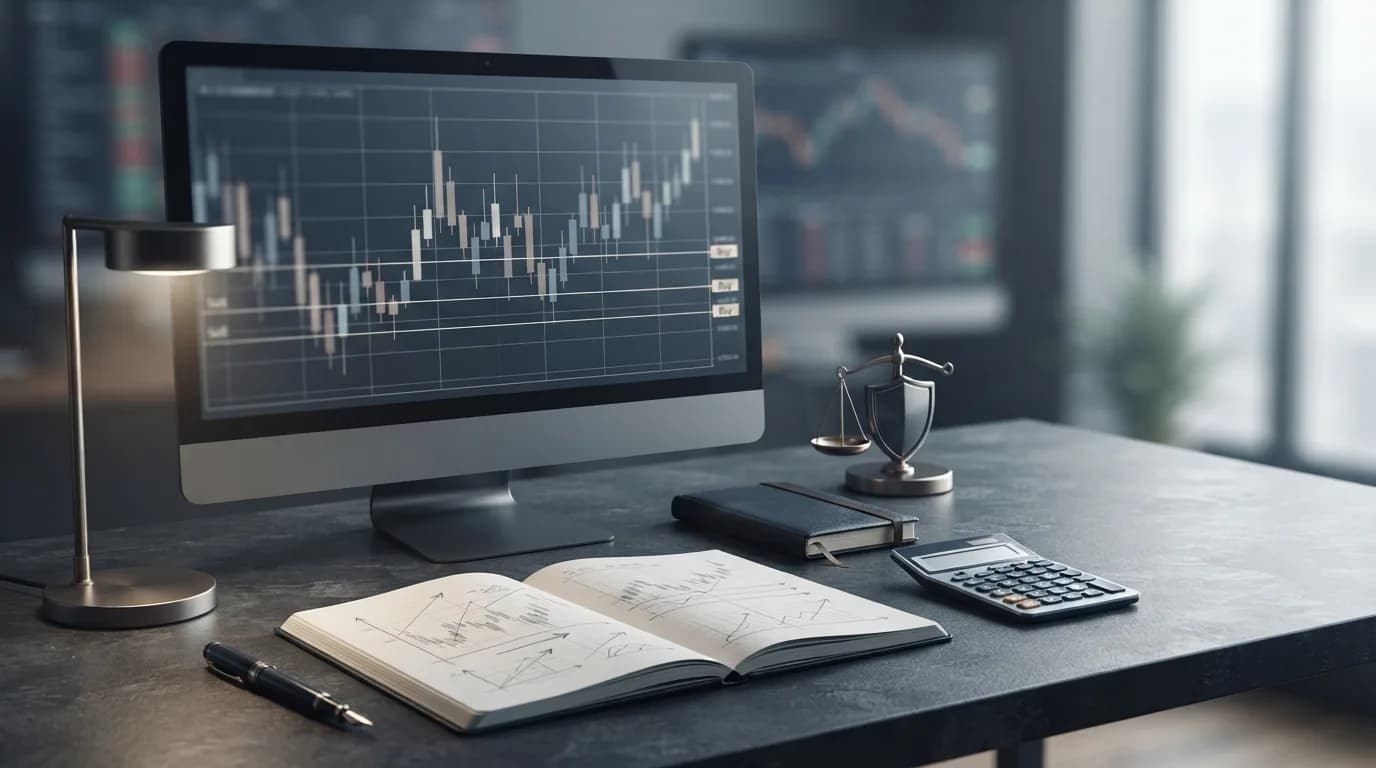
Grid trading is a mechanical trading strategy that sets buy and sell orders at fixed intervals above and below the current market price. The trader creates a grid of orders with a certain grid size or step distance, and the strategy profits from market oscillations as the price moves up and down within a defined range. It is entirely rules-based and can be automated, making it appealing to traders who prefer systematic approaches over discretionary decision-making.
How Grid Trading Works
- Buy Orders: Place buy orders at set intervals below the market price.
- Sell Orders: Place sell orders at set intervals above the market price.
- As the market price moves up or down, the system automatically executes trades at the predetermined levels.
- Profit from Price Fluctuations: The strategy works best in sideways or range-bound markets, where the price fluctuates between certain high and low points.
Example
Let’s say the current price of a cryptocurrency like Bitcoin (BTC) is $25,000. A trader using a grid trading strategy might set the grid size to $500. The trader will place buy orders at intervals of $500 below $25,000 (e.g., $24,500, $24,000, etc.) and sell orders at intervals above $25,000 (e.g., $25,500, $26,000, etc.). As the market price moves between these levels, the grid orders will automatically execute, and the trader will profit from each move. This means the trader does not need to predict whether the price will go up or down—only that it will continue to fluctuate.
Key Components of Grid Trading
To effectively use grid trading, there are several critical components to consider.
Grid Size
The grid size determines the spacing between the buy and sell orders. A smaller grid size results in more trades, while a larger grid size results in fewer, larger trades. The optimal grid size depends on the asset’s volatility, as well as the trader's risk tolerance and time horizon. For highly volatile assets, a larger grid size can prevent frequent whipsaws, while for less volatile assets, a smaller grid may capture more opportunities.
Grid Depth
Grid depth refers to the number of levels or layers of orders you want to place in the grid. For example, if you want to place 10 buy orders below the market price and 10 sell orders above, the grid depth is 20. A deeper grid offers more opportunities for trades but can also increase risk. Deeper grids tie up more capital and are more exposed to sustained directional moves.
Capital Allocation
Grid trading requires sufficient capital to maintain all the open orders. It’s essential to have enough funds to support the grid depth and cover potential losses if the market moves against your position. If the market moves in one direction for too long without reversing, you may face significant losses. As a general rule, never allocate more capital to a grid than you are prepared to lose entirely.
Risk Management
As with any strategy, risk management is crucial. Since grid trading can result in large amounts of capital being tied up in open orders, having proper stop-loss orders in place and diversifying your grid positions across different assets can help mitigate risk. Some traders set a maximum drawdown limit and halt the strategy if losses exceed that threshold.
Advantages of Grid Trading
Grid trading offers several benefits, especially for traders looking for a systematic approach to capitalize on market volatility.
Profits from Volatility
Grid trading thrives in volatile markets, as it allows traders to profit from price movements within a range. By placing buy and sell orders at regular intervals, traders can capture profits from market oscillations without needing to predict the market's direction.
No Need to Predict Market Direction
Unlike many trading strategies that require market prediction, grid trading relies on price fluctuations, regardless of whether the market is bullish or bearish. This makes it ideal for sideways or ranging markets, such as those often seen in cryptocurrency trading. The trader only needs to assume that volatility will continue.
Automation
Grid trading can be automated using trading bots and algorithms. Many platforms, especially in the cryptocurrency space, offer built-in grid trading bots, which execute trades based on preset parameters. This removes the need for constant monitoring and execution, saving traders time and effort. Automation also helps enforce discipline, as the system follows the plan without emotional interference.
Adaptability
Grid trading can be used for a wide variety of markets, including traditional stock markets, forex, and cryptocurrencies. Traders can adjust the grid parameters to suit different asset classes and trading conditions. For instance, forex traders might use smaller grid sizes with lower leverage, while crypto traders may use wider grids to accommodate higher volatility.
Challenges and Risks of Grid Trading
While grid trading can be profitable, it is not without its risks. Traders must understand the potential challenges to make the strategy work effectively.
Choppy Markets
Grid trading works best in sideways or range-bound markets. In trending markets (either up or down), the price can move away from your grid orders for extended periods, potentially locking up your capital in unprofitable positions. A strong trend can cause the grid to accumulate positions in one direction, leading to a large unrealized loss.
Overcapitalization
A deep grid with too many orders or a small grid size can tie up a large portion of your capital. If the market moves strongly in one direction, you might need to invest more capital to maintain your positions, potentially leading to significant losses if the trend continues. This is especially dangerous if the trader uses leverage or margin.
Psychological Stress
Grid trading, while automated, can still cause psychological stress if the market moves against your positions for a prolonged period. Traders may feel pressure to intervene and adjust the strategy, especially during major market corrections. The temptation to manually override the grid or widen the stop-loss can lead to poor decisions.
Platform and Fee Risks
Many trading platforms offer grid trading bots, but not all platforms are equal in terms of reliability, fees, and features. High transaction fees or poor execution can erode profits over time. Before committing to a platform, a trader should verify current fee schedules, order execution quality, and the track record of the bot provider. What works for one asset class may not work for another.
Best Practices for Successful Grid Trading
While grid trading can be highly effective, it's important to implement the right strategies to minimize risk and maximize returns.
Choosing the Right Market
Grid trading works best in markets that experience consistent fluctuations. It’s essential to avoid trending markets where prices move in one direction for an extended period. Cryptocurrencies, especially altcoins, can often experience high volatility, making them suitable for grid trading. Forex pairs like EUR/USD that frequently range are also candidates.
Start with a Small Grid Size
If you’re new to grid trading, it’s recommended to start with a small grid size to test the waters. Smaller grids allow for more frequent trades, reducing the risk of large losses while you gain experience with the strategy. You can gradually increase the grid size as you become more comfortable.
Monitor Market Sentiment
Although grid trading doesn’t rely on predicting market direction, understanding overall market sentiment can help you avoid using the strategy during strong bullish or bearish trends. Use sentiment analysis tools and market indicators to guide your decision. For example, if news suggests a prolonged trend, it may be wise to pause grid trading until sideways conditions return.
Use Risk Management Tools
Set stop-loss and take-profit levels to help manage risk. You can also use trailing stops to lock in profits as the market moves in your favor. Be sure to regularly adjust your positions based on the market’s movement and volatility. A maximum drawdown limit can prevent catastrophic losses.
Choosing a Grid Trading Platform: What to Verify
Many traders ask which platform is best for grid trading. However, a reliable provider ranking requires current fee and product verification, as fees, spreads, and features change frequently. Instead of listing specific platforms as “best,” we encourage readers to consider the following criteria when evaluating a platform:
- Fees: Review maker-taker fees, grid bot subscription costs, and withdrawal fees. High fees can erode profits from many small trades.
- Asset availability: Does the platform support the assets you want to trade? Some platforms only offer grids for crypto, others for forex or stocks.
- Customization: Can you set grid size, depth, and take-profit levels? More control allows you to adapt to market conditions.
- Reliability: Check user reviews and uptime history. A bot that fails during high volatility can cause losses.
- Liquidity: Ensure the exchange or broker offers enough liquidity for your order sizes without slippage.
- Regulation: If trading forex or CFDs, confirm that the broker is regulated in your jurisdiction. Grid trading with a no-dealing-desk broker may affect execution.
Because platform features and fees are subject to change, always verify the latest details on the provider’s official website before funding an account.
Is Grid Trading Right for You?
Grid trading can be a highly effective strategy in volatile and range-bound markets. By automating buy and sell orders, traders can profit from small price fluctuations without the need to predict market movements. However, it is not without its risks, especially during trending markets or when capital is over-leveraged.
To succeed with grid trading, it’s essential to carefully plan your grid size, depth, and risk management strategy. Whether you’re a seasoned trader or a newcomer to the world of automated trading, grid trading can be a valuable addition to your portfolio—if applied thoughtfully and strategically.
Limitations and Verification Note
The information in this article is for educational purposes only and does not constitute financial advice. Grid trading carries substantial risk, including potential loss of all capital allocated to the strategy. Past performance does not guarantee future results. Any platform features, fees, or execution details mentioned in examples should be independently verified on the provider’s official website before use. Tax implications of grid trading may vary by jurisdiction; consult a qualified tax professional.